
Leader Pipeline
Tune in as Pastor Greg gives us an update on where we've been and where we're going.
If you couldn’t make it to First Conference, don’t worry—we’ve got you covered! Check out the link below to catch all the highlights and see what you missed.
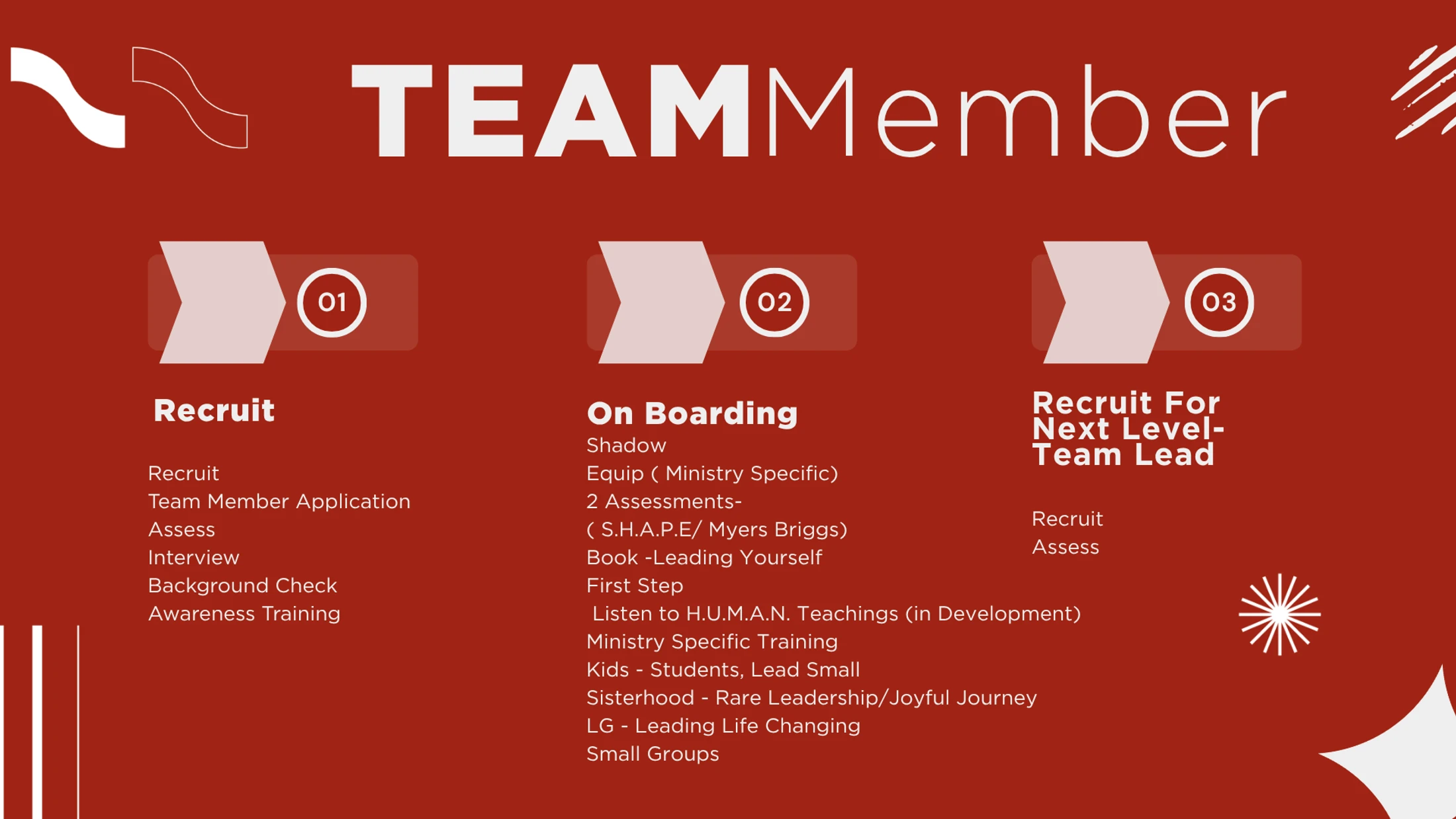
The Team Member serves faithfully on the Dream Team by actively participating in ministry execution and contributing to a healthy, Christ-centered team culture.
This role is focused on consistent serving, relational connection, and personal spiritual growth while supporting the vision and direction of the Ministry.
Team Members lead through attitude, reliability, and example, creating an environment where guests and fellow team members feel welcomed, cared for, and valued.
Serve with Excellence & Consistency: Faithfully fulfill assigned serving responsibilities with a positive attitude, preparedness, and commitment to excellence. Arrive on time, ready to serve, and fully engaged in the ministry role.
Participate in Team Huddles & Check-Ins: Engage in pre-service team moments, huddles, or check-ins led by the Team Lead. These moments are designed for alignment, encouragement, prayer, and readiness to serve.
Support Team Culture & Unity: Contribute to a healthy, unified team environment by building positive relationships, showing honor to leaders and peers, and working collaboratively with others.
Personal Spiritual Health & Growth: Maintain healthy spiritual rhythms, including prayer, worship, and connection to the local church. Remain open to spiritual growth, feedback, and encouragement from leaders. Also make the space for consistent worship and service participation.
Communication & Responsiveness: Communicate clearly with the Team Lead regarding availability, schedule changes, or challenges. Be responsive to team communication and follow through on commitments.
Represent the Ministry Well: Serve as a Christ-centered example to guests, attenders, and teammates through words, actions, and character both on and off the serving environment.
Recruit & Invite Others (As Led): Be open to inviting others to serve when opportunities arise and speak positively about the ministry and Dream Team culture.
Faithfulness & Reliability: Shows consistency, dependability, and commitment to serving.
Teachable Spirit: Receives direction, feedback, and coaching with humility and a desire to grow.
Servant Heart: Willingly serves where needed with joy, flexibility, and gratitude.
Relational Awareness: Engages with others kindly, creating a welcoming and supportive environment.
Spiritual Sensitivity: Serves with awareness of the Holy Spirit, prayerfulness, and Christlike character.
Serves With: Dream Team Members
Led By: Team Lead
Primary Focus: Faithful service, teamwork, and ministry execution
Decision Authority: Personal responsibilities and assigned serving tasks
Team Member consistently shows up prepared, engaged, and on time • Ministry responsibilities are carried out with excellence and care
Team culture feels welcoming, unified, and Christ-centered
Team Member grows spiritually and relationally
Team Lead feels supported and able to lead effectively
Guests and attenders experience warmth, clarity, and excellence through the team
Regular service participation
Attendance at team huddles or pre-service moments
Active communication with the Team Lead
Ongoing engagement in church life and spiritual growth
Willingness to learn, grow, and serve consistently
- Team Member Application
- Team Member Job Description
- Background Check & Awareness Training
- FIRST STEP
- S.H.A.P.E. TEST
- MEYERS BRIGGS
- Leading Yourself
- Leading Small – Crossing Kid’s Ministry Only
- Leading Life Changing Small Group Book – Life Group Leaders Only
- Rare Leadership Book – Sisterhood Only
- Joyful Journey Book – Sisterhood Only
- Team Member Video
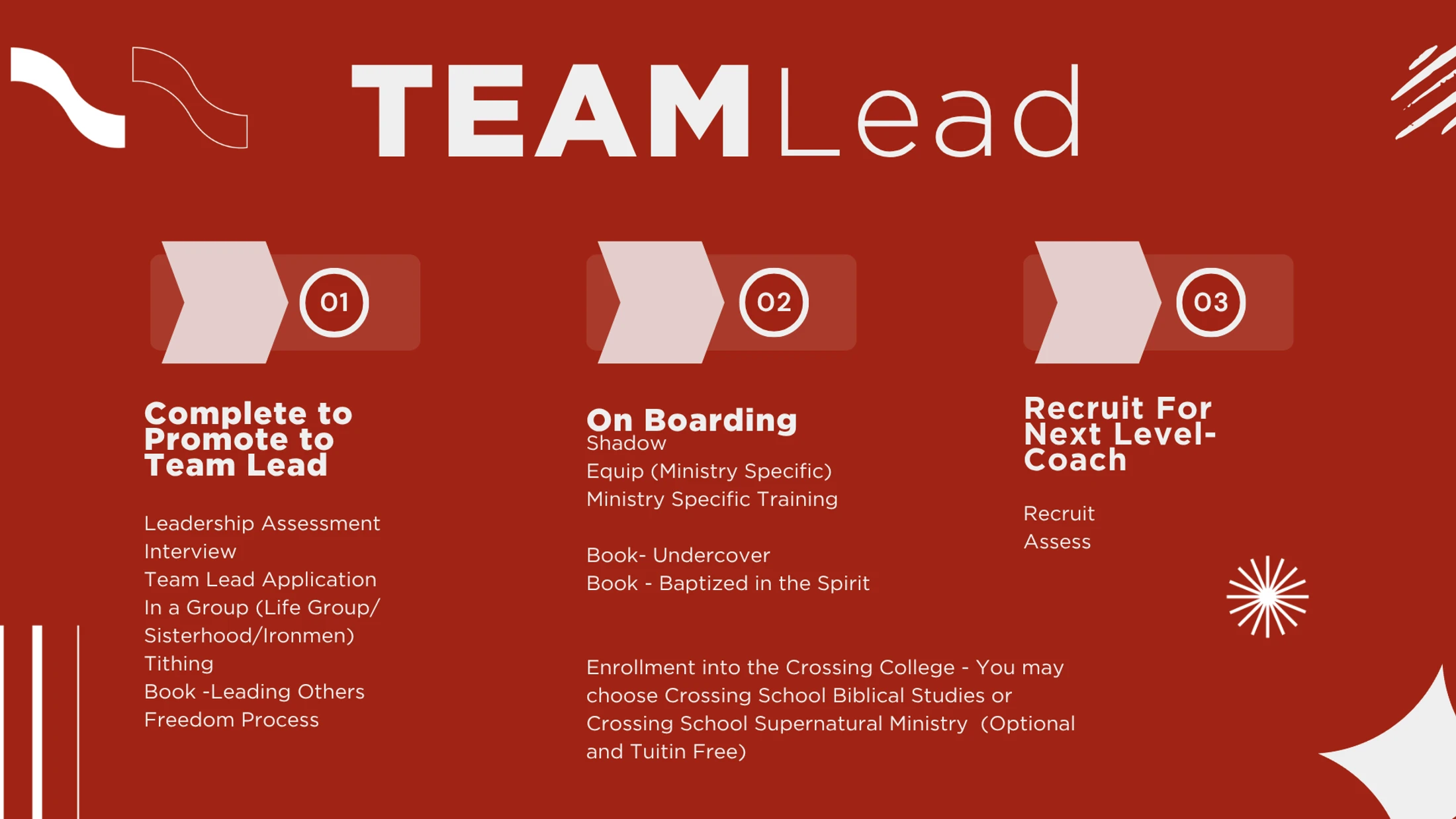
The Team Lead is responsible for leading and caring for a team of Dream Team members by fostering relational connection, spiritual health, and consistent ministry execution. This role serves as the first level of leadership, helping team members thrive spiritually and practically while supporting the vision and direction of the Ministry.
The Team Lead leads by example and influence, remaining actively involved in serving while developing others.
Lead Team Gatherings & Check-Ins: Facilitate brief, consistent team check-ins or pre service moments to encourage, align, and prepare team members. These moments focus on connection, clarity, prayer, and readiness to serve.
Support & Encourage Team Member: Provide relational leadership and encouragement to team members through regular communication, availability, and presence. Help volunteers feel known, valued, and confident in their role.
Spiritual Care & Shepherding: Invest in the personal and spiritual growth of team members. Pray for them, check in on their spiritual health, and encourage healthy spiritual rhythms and Christ-centered living.
Problem Solving & Relational Support: Address minor challenges, questions, and relational tensions at the team level. Promote unity, clarity, and a healthy team environment, escalating issues to the Coach when appropriate.
Develop Future Leaders: Identify team members with leadership potential and encourage growth. Help move potential leaders into our R.A.I.S.E. process
Recruit and multiply team members: Identify and invite potential team members into the ministry. Train team members to identify and recruit new team members to the team.
Communicate with the Coach: Maintain consistent communication with the Coach regarding team health, attendance, wins, challenges, and opportunities for growth. Support the Coach by providing timely insight from the team level.
Self-Leadership: Models faithfulness, humility, teachability, and personal spiritual growth.
Relational Leadership: Builds trust, creates connection, and leads with care and encouragement.
Servant Leadership: Leads by example while actively serving alongside the team.
Spiritual Awareness: Leads with prayer, discernment, and dependence on the Holy Spirit.
Team Engagement: Creates an environment where volunteers feel supported, valued, and motivated to serve.
Leads: Team Members (volunteers)
Reports To: Coach
Leadership Focus: People care, consistency, and execution
Decision Authority: Team-level needs and support
Team members feel known, supported, and spiritually encouraged
Team Members show up prepared, engaged, and consistent
Ministry execution is reliable and smooth at the team level
Potential leaders are being identified and encouraged
Coach is informed, supported, and freed to lead leaders
Team culture is healthy, unified, and Christ-centered
Regular service participation and team presence
Brief team huddles or pre-service moments
Informal check-ins and relational touch points
Ongoing communication with the Coach
Commitment to personal spiritual and leadership growth
- TEAM LEADER APPLICATION
- Team Lead Job Description
- In a Group (Small Group/Sisterhood/Iron Men)
- Tithing
- Leading Others Book (Complete Prior to becoming Team Leader)
- Baptized in the Spirit Book (Complete Prior to becoming Team Leader)
- Leadership Assessment Instructional Video & Leader Assessment
- Undercover Book (Complete prior to becoming a Coach)
- Freedom (Complete prior to becoming a Team Lead)
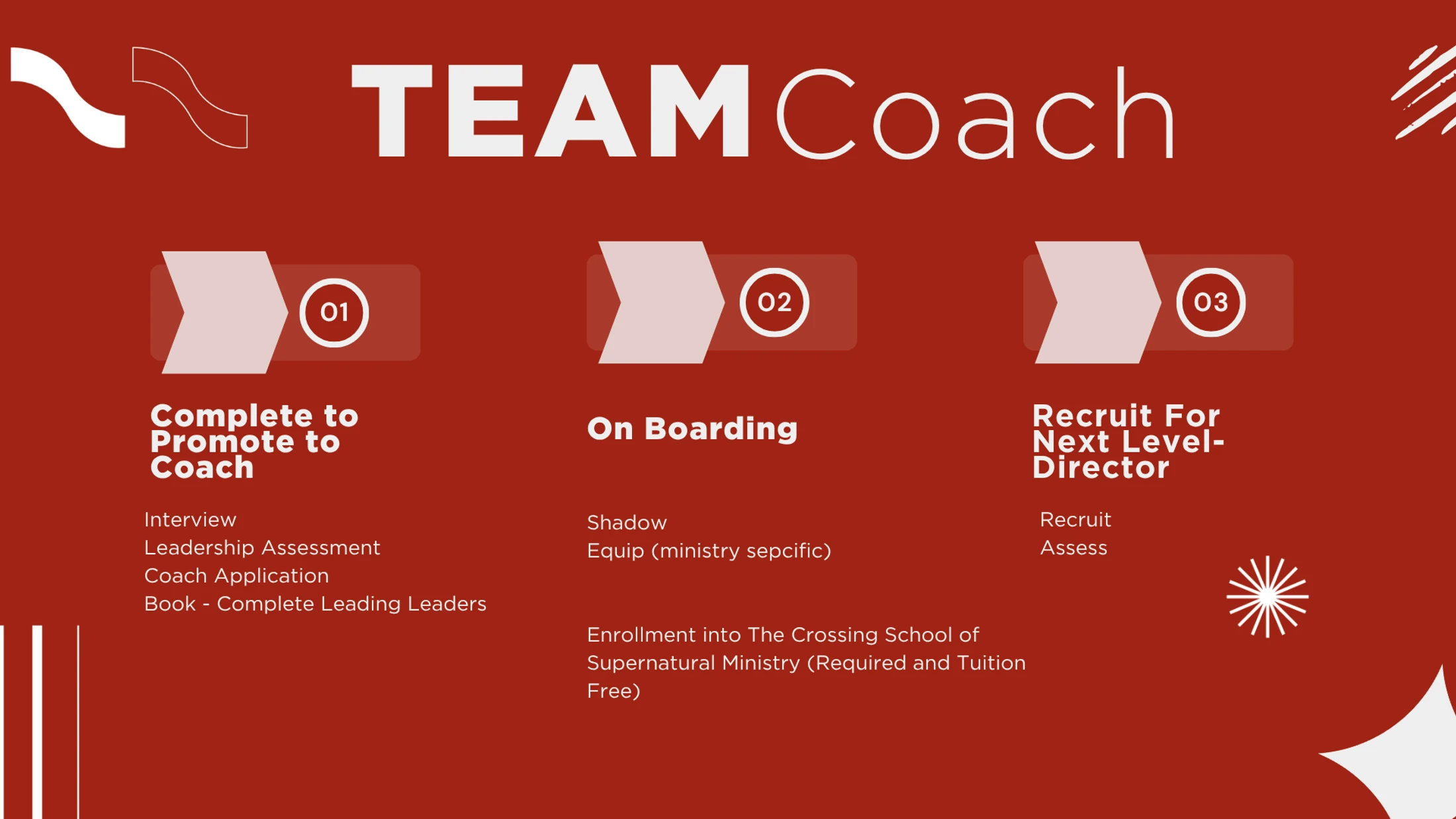
The Leader of Leaders is responsible for developing, equipping, and supporting volunteer leaders within the ministry. This role ensures the health, growth, and multiplication of leaders by fostering spiritual formation, coaching for competency, and creating a thriving leadership culture.
Lead Huddles: Facilitate regular huddles to develop, encourage, and equip leaders. These gatherings focus on spiritual growth, leadership skills, and team alignment.
Coach & Support Leaders: Provide ongoing one-on-one coaching and guidance. Help leaders grow in confidence, spiritual maturity, and effectiveness in their roles through monthly one-on-one meetings and weekly touching base through conversation, text message, phone call or slack communication.
Spiritual Shepherding: Invest in the personal and spiritual lives of leaders. Encourage spiritual rhythms, accountability, and intentional discipleship, including individual prayer and check-ins.
Problem Solving & Conflict Resolution: Support leaders in navigating challenges and relational tensions. Promote unity, clarity, and healthy team culture. Keep the director informed of all major conflict
Recruit & Multiply Leaders: Identify and invite potential leaders into the ministry. Advance the leadership pipeline by multiplying those who can lead others well.
Develop Future Leaders: Identify team leaders with coach potential and encourage growth. Help move potential leaders into our R.A.I.S.E. process
Evaluate & Provide Feedback: Regularly assess leader engagement and ministry effectiveness. Offer insights to improve leadership health and team impact. Maintain your depth chart and all process Q’s.
Collaborate with the Director: Meet regularly with your Ministry Director to align on vision, address challenges, and strategize for team growth.
Self-Leadership: Models ongoing spiritual and personal development
Coaching Mindset: Draws out potential and fosters growth in others
Spiritual Intelligence: Leads with discernment, prayer, and dependence on the Holy Spirit
Strategic Thinking: Helps implement simple, sustainable leadership systems
Relational Leadership: Builds trust, encourages others, and handles feedback well
Vision Alignment: Understands and supports the ministry’s mission, values, and goals
Leads: Team Leads (primary) and other volunteer leaders assigned within the ministry structure
Develops: Leaders who lead team members (leader-of-leaders responsibility)
Reports To: Ministry Director
Leadership Focus: Leader health, leader development, multiplication, and culture
Primary Tools: Huddles, 1-on-1 coaching, feedback loops, spiritual shepherding
Decision Authority:
o Makes team-level leadership decisions (placements, development steps, support plans)
o Addresses leadership issues and recommends changes to improve health and effectiveness
o Escalates major conflict, policy issues, or structural changes to the Ministry Director
Team Leaders are spiritually healthy, supported, and developing team members
Huddles and 1-on-1s are consistent and impactful
New leaders are regularly identified, trained, and launched
Team leads are consistently recruiting and adding new Team Members
Ministry Director is well-informed and aligned with team needs
Team culture is unified, Christ-centered, and focused on mission
Mix of 1-on-1 coaching, group huddles, and leader development
Flexible hours to meet with volunteers (some evenings/weekends)
Regular touchpoints with your Ministry Director
Ongoing commitment to personal leadership and spiritual growth
- Leader Assessment Instructional Video & Leadership Assessment
- Coach Job Description
- COACH APPLICATION
- Coach Video
- Complete LEADING LEADERS BOOK (Complete prior to becoming a Coach)
- Enrollment into Crossing School Supernatual Ministry - required and is tuition free
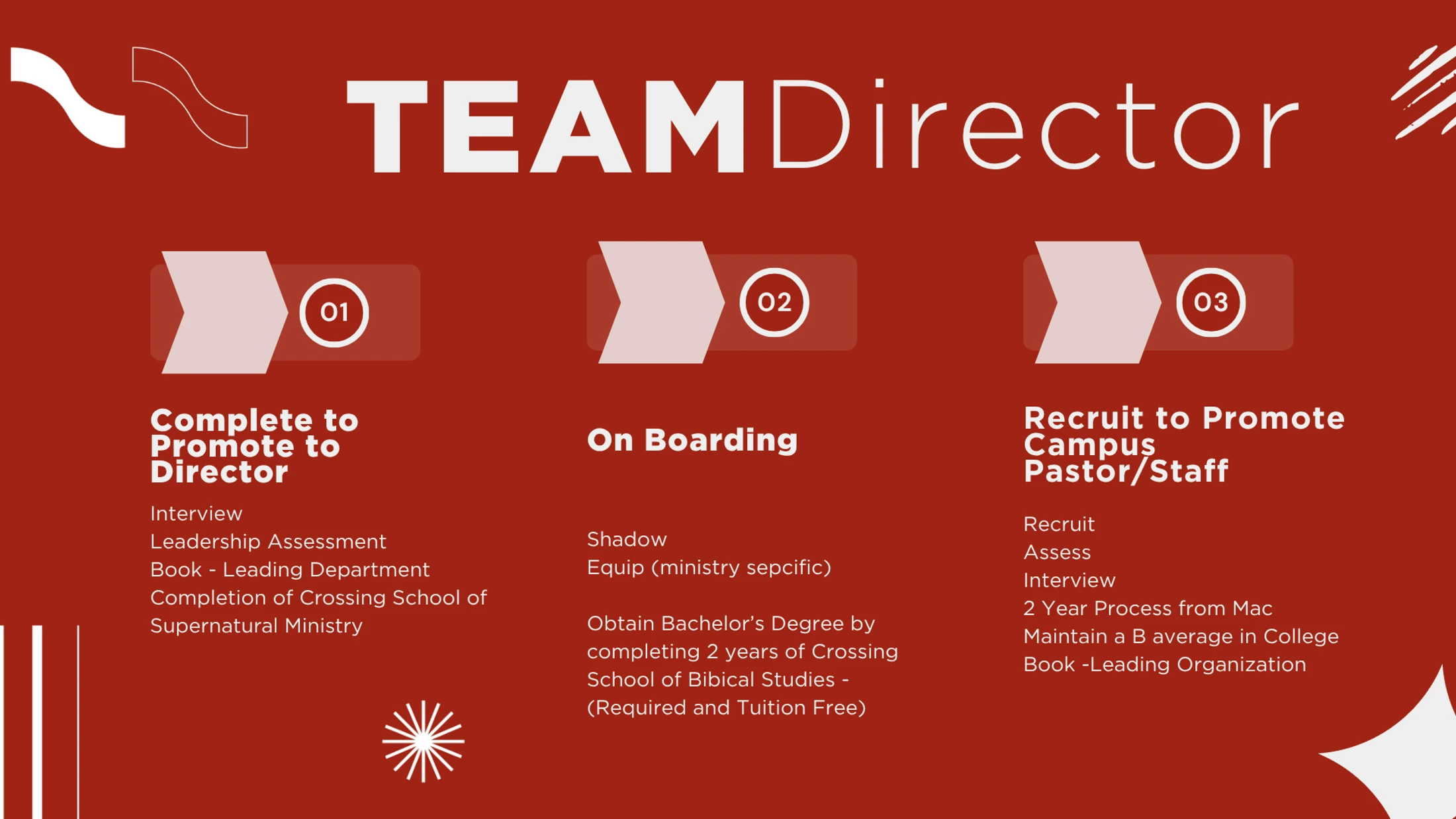
The Director is responsible for providing spiritual, strategic, and operational leadership for a ministry area by leading Coaches and overseeing the health, growth, and execution of teams. This role carries vision ownership at the ministry level, ensuring alignment with the church’s mission, values, and direction while developing leaders who lead leaders.
The Director leads primarily through influence, clarity, and empowerment—setting direction, cultivating healthy leadership culture.
Vision & Directional Leadership: Own and steward the vision of the ministry area. Translate church-wide vision into clear ministry direction, priorities, and expectations that guide Coaches and teams toward consistent, aligned execution.
Lead & Develop Coaches: Provide leadership, care, and coaching to Coaches. Invest in their spiritual health, leadership growth, and effectiveness, helping them lead Team Leads with clarity and confidence.
Spiritual Oversight & Shepherding: Carry spiritual responsibility for the ministry and its leaders. Pray for Coaches and leaders, model Christ-centered leadership, and ensure spiritual health, unity, and integrity remain central.
Ministry Health & Execution: Ensure ministry systems, teams, and environments are healthy, effective, and scalable. Address challenges, gaps, or misalignment at the ministry level to protect culture and honor.
Leadership Pipeline & Development: Champion and oversee the leadership pipeline (Team Member → Team Lead → Coach). Ensure leaders are being identified, developed, and moved through the R.A.I.S.E. process with intentionality.
Strategic Planning & Improvement: Evaluate ministry effectiveness, identify opportunities for growth or improvement, and implement strategies that strengthen both people and processes.
Communication & Alignment: Maintain consistent communication with Senior Leadership and peer Directors. Share updates, wins, challenges, and strategic needs while ensuring Coaches remain aligned and informed.
Culture & Values Champion: Protect and model a healthy, Christ-centered leadership culture marked by unity, trust, accountability, and servant leadership.
Visionary Leadership: Thinks strategically, sets direction, and keeps the ministry aligned with the bigger picture.
Leader of Leaders: Effectively develops, empowers, and releases Coaches to lead well.
Spiritual Maturity: Leads with prayer, discernment, humility, and dependence on the Holy Spirit.
Organizational Leadership: Balances people care with systems, structure, and execution.
Culture Building: Establishes clarity, trust, and consistency across teams and leaders.
Leads: Coaches (who lead Team Leads and Team Members)
Reports To: Department lead / Senior Leadership / Executive Pastor (as applicable)
Leadership Focus: Vision, leader health, and ministry alignment
Decision Authority: Ministry-level strategy, systems, and leadership direction
Coaches feel supported, developed, and clear in their leadership role
Team Leads are healthy, effective, and consistently developed
Ministry vision is clear, owned, and executed with excellence
Leadership pipeline is active, intentional, and multiplying leaders
Ministry culture is unified, spiritually healthy, and values-driven
Senior Leadership is informed, aligned, and confident in the ministry’s direction
Regular leadership meetings with Coaches
Ongoing one-on-ones and spiritual care for leaders
Strategic planning and evaluation rhythms
Collaboration with peer Directors and Senior Leadership
Consistent prayer, preparation, and personal leadership development
Commitment to spiritual health and sustainable leadership practices
- TEAM DIRECTOR APPLICATION
- Director Job Description
- Leader Assessment Instructional Video & Leadership Assessment
- Complete LEADING A DEPARTMENT BOOK (Complete prior to becoming a Director)